Dans la tête d’un platiste
Contexte: Éditions Université Paris Cité, 2026
Impression: Le Réveil de la Marne
Description: 12×20 cm, 104 pages
Typographie: Immortel, 205TF
Mise en page réalisée avec Béatrice Delas
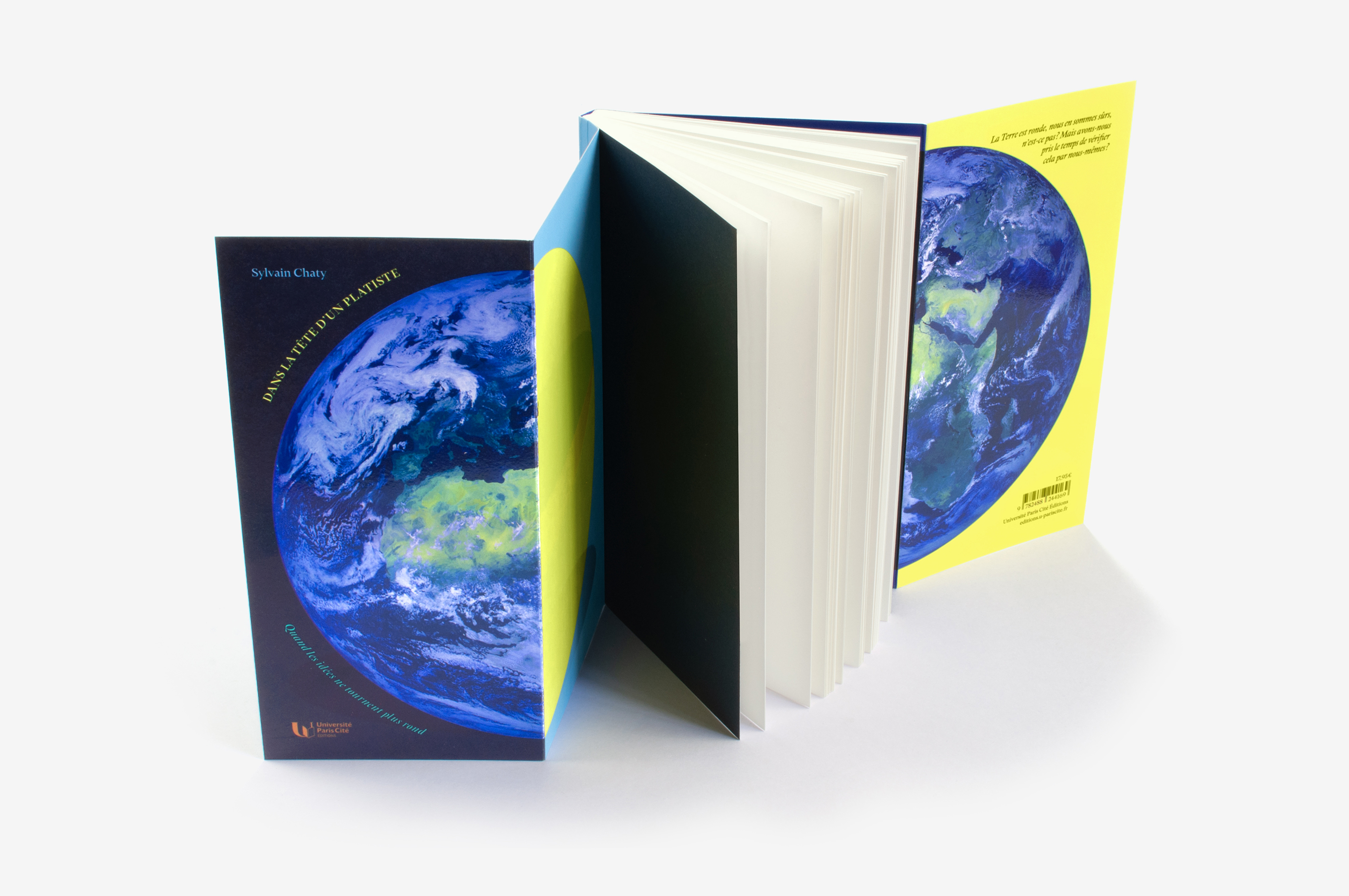
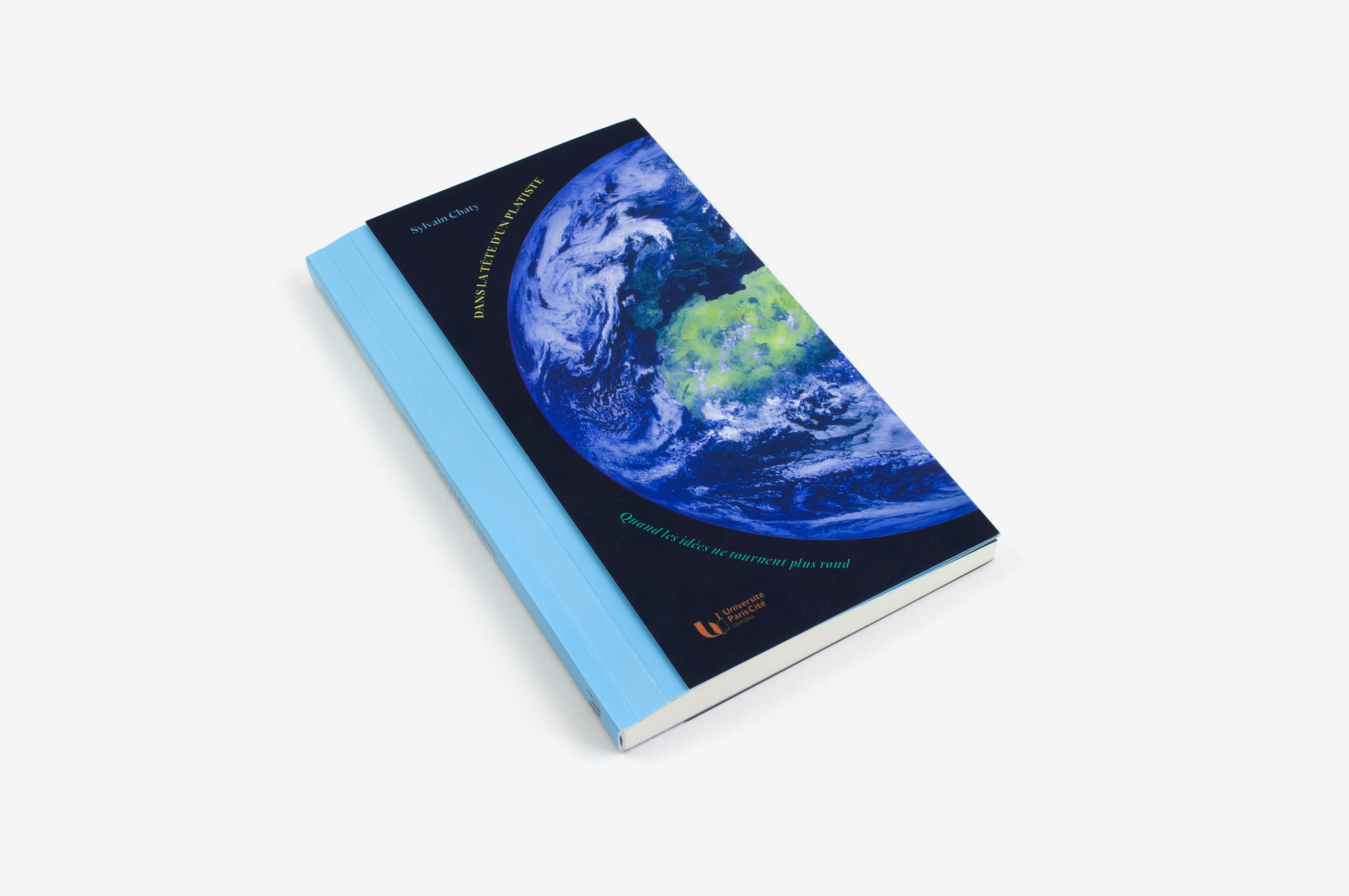
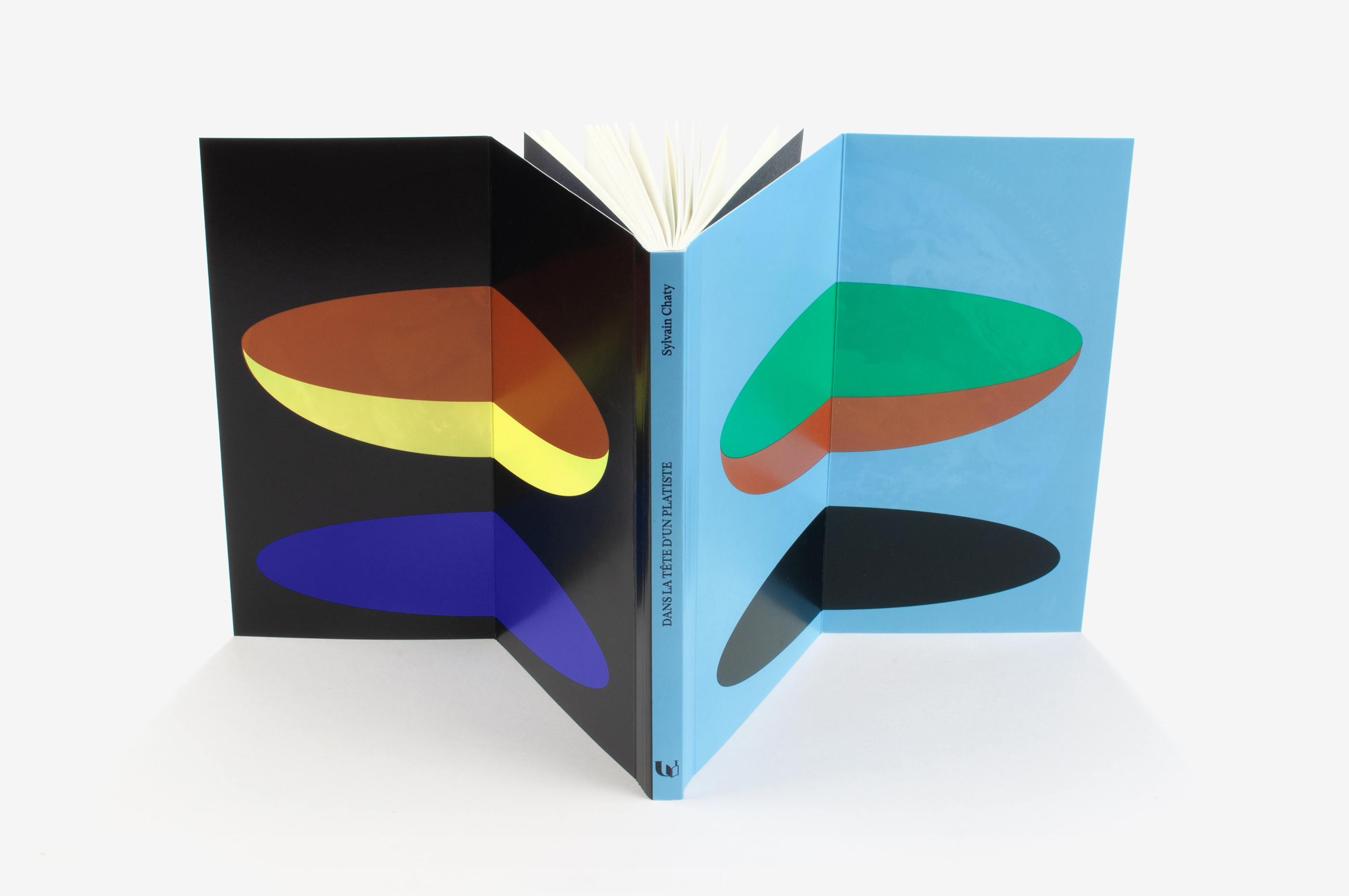
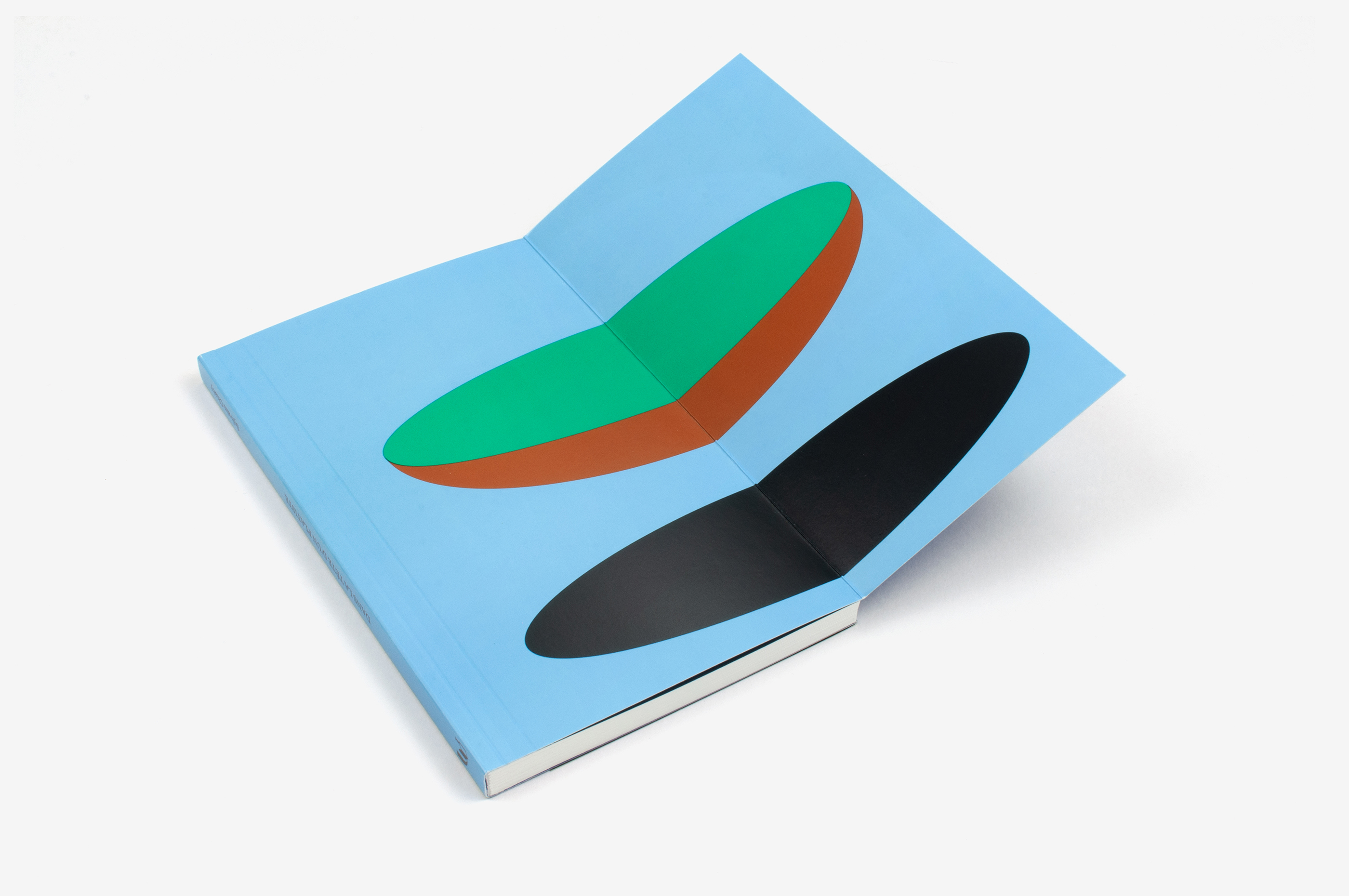
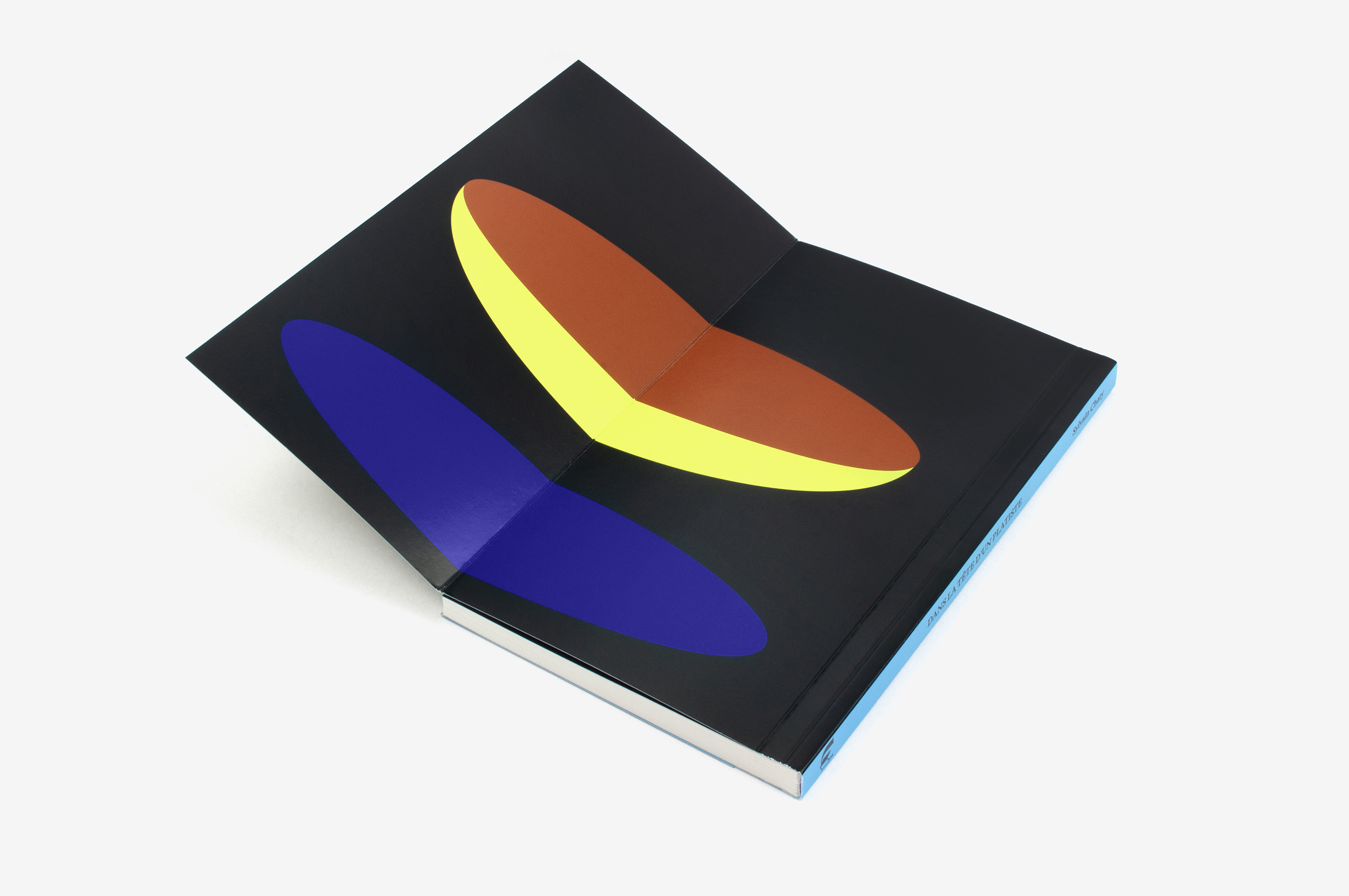
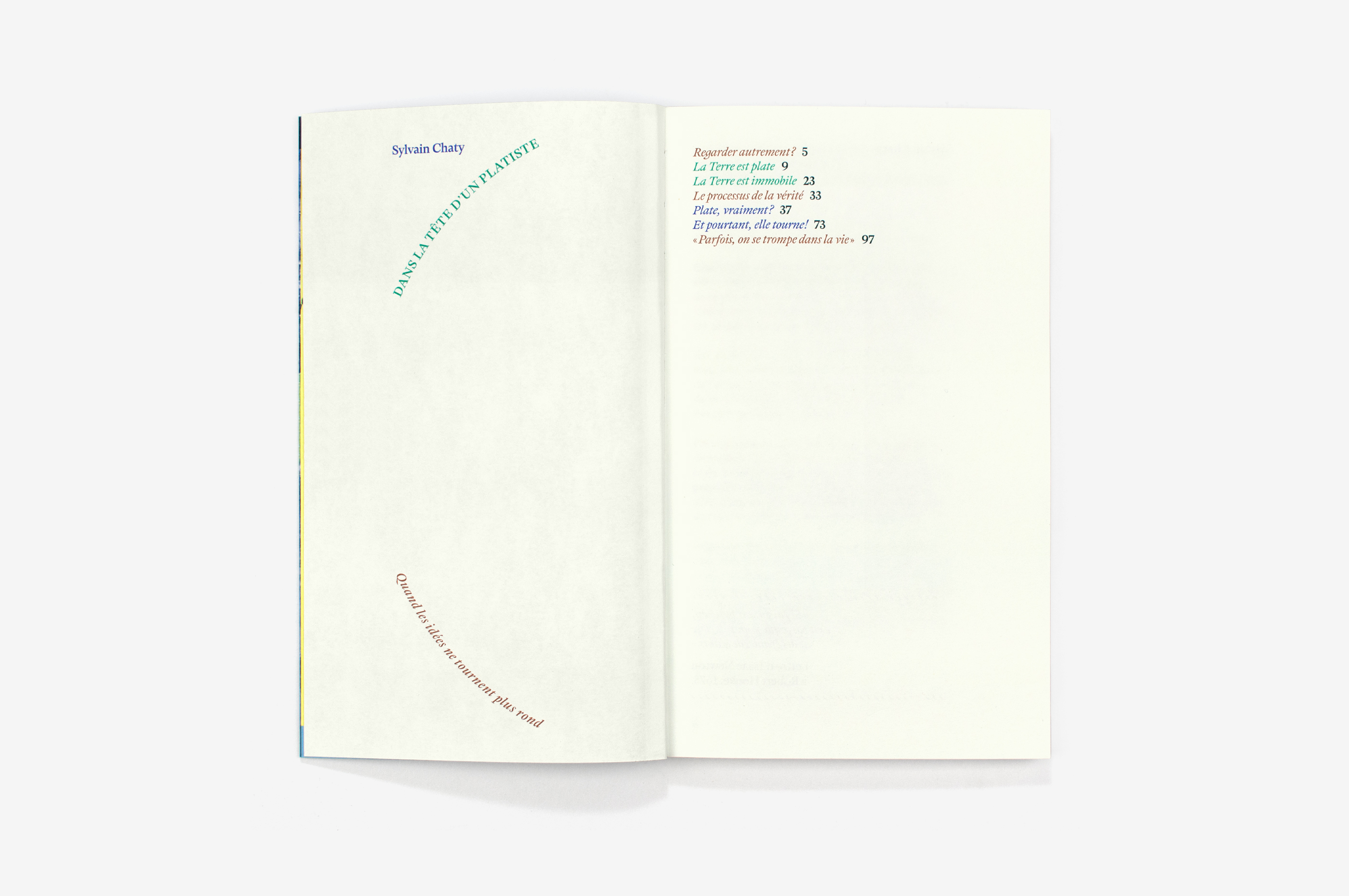
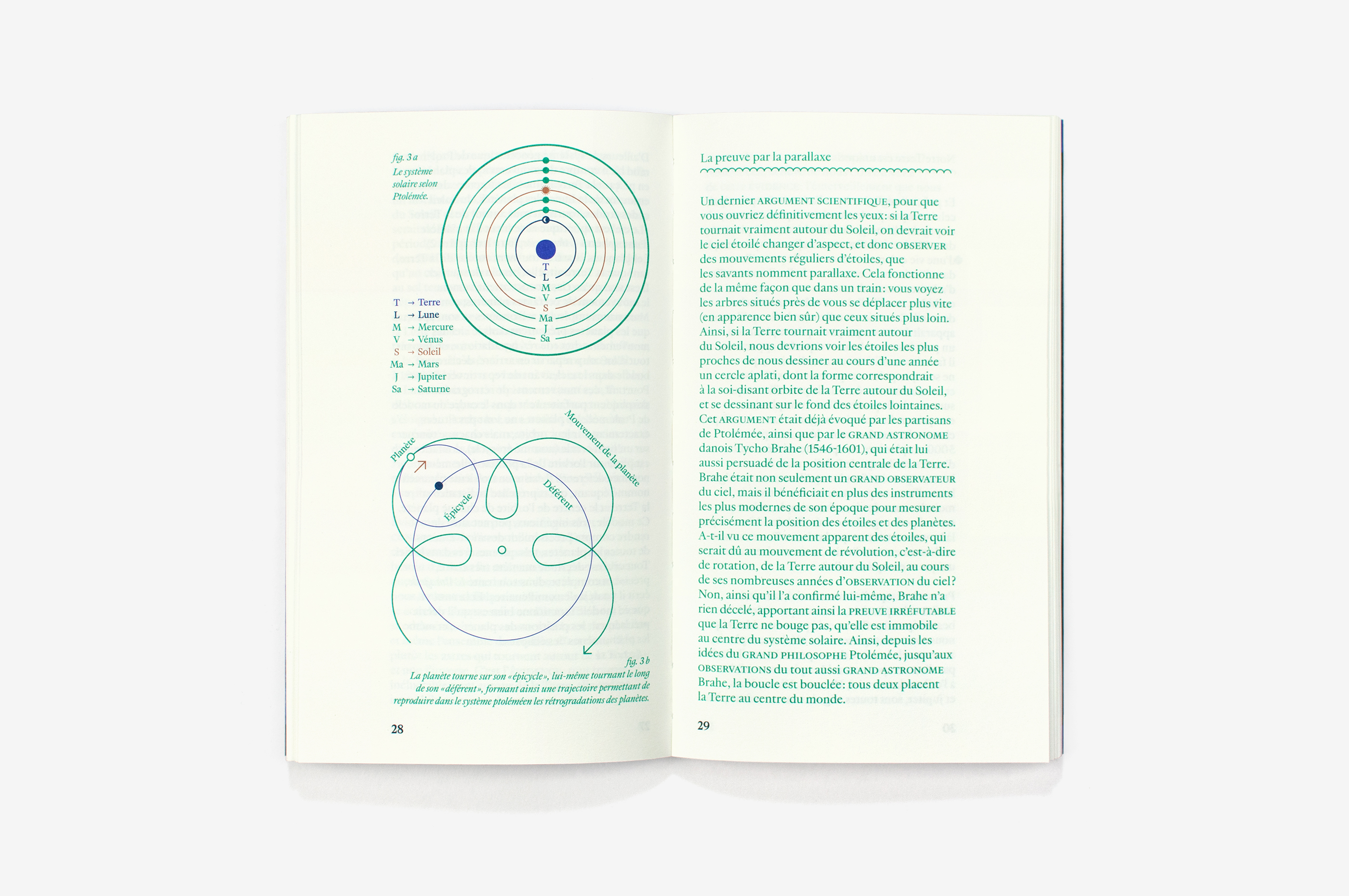
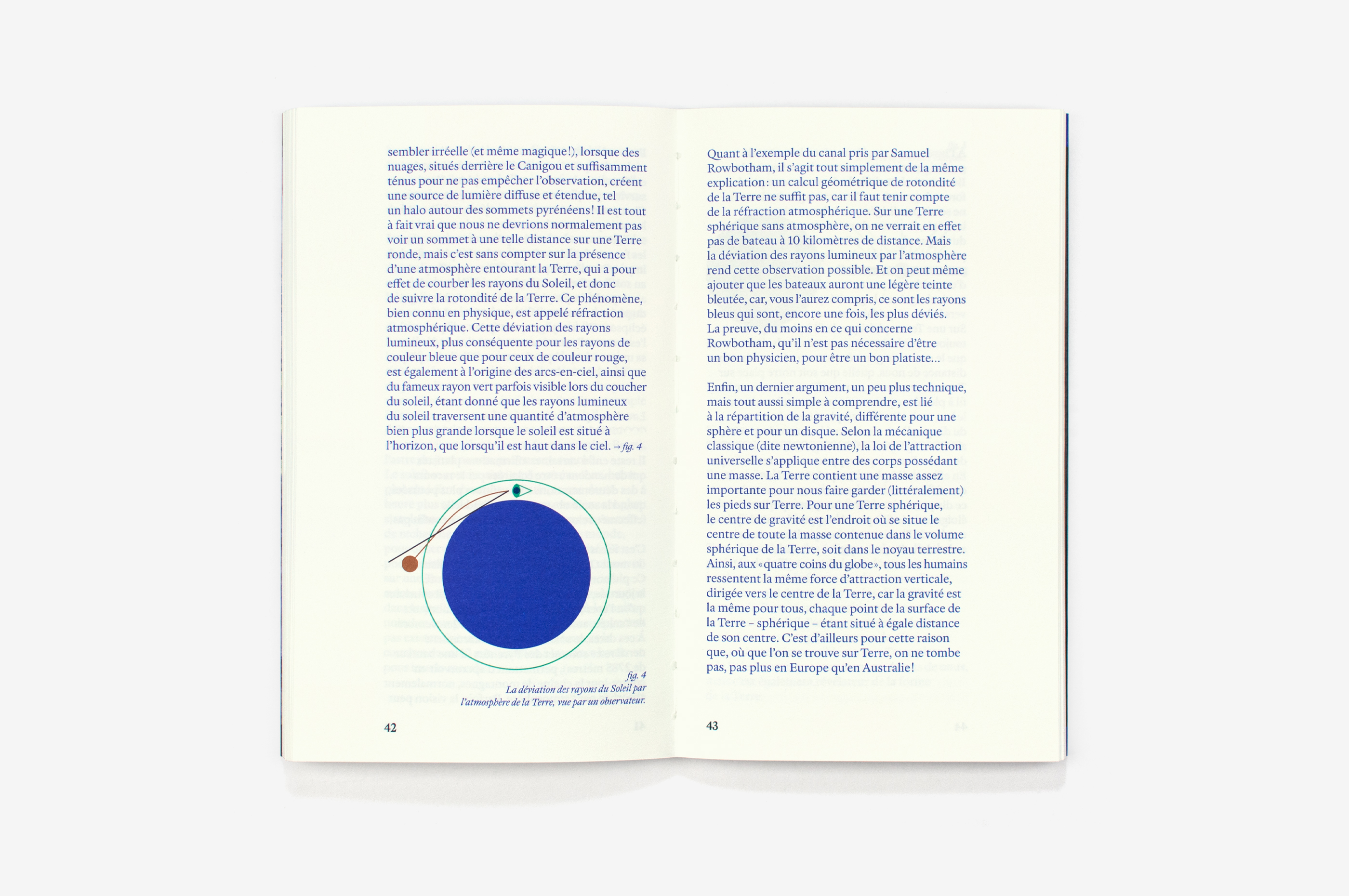
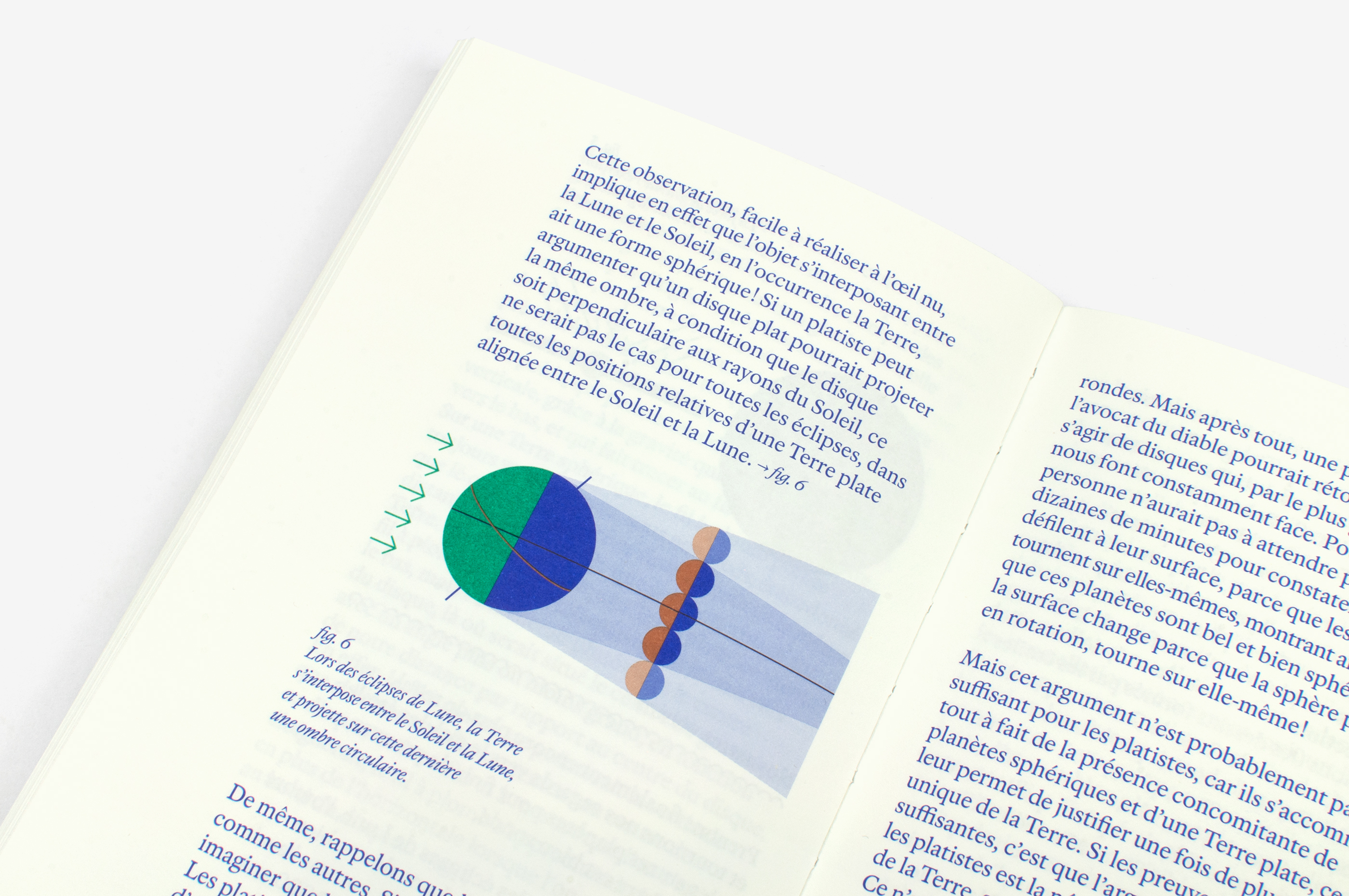
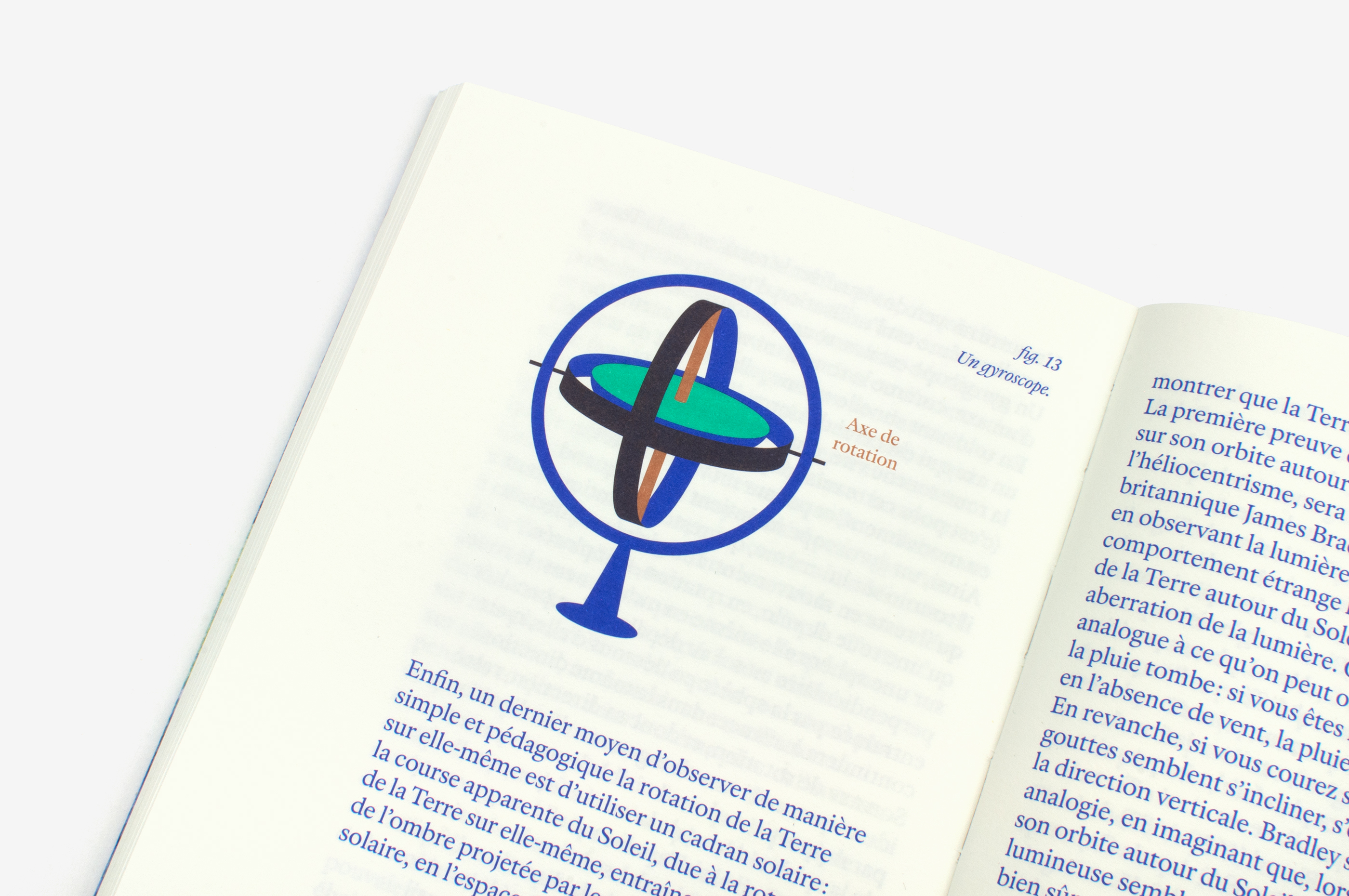
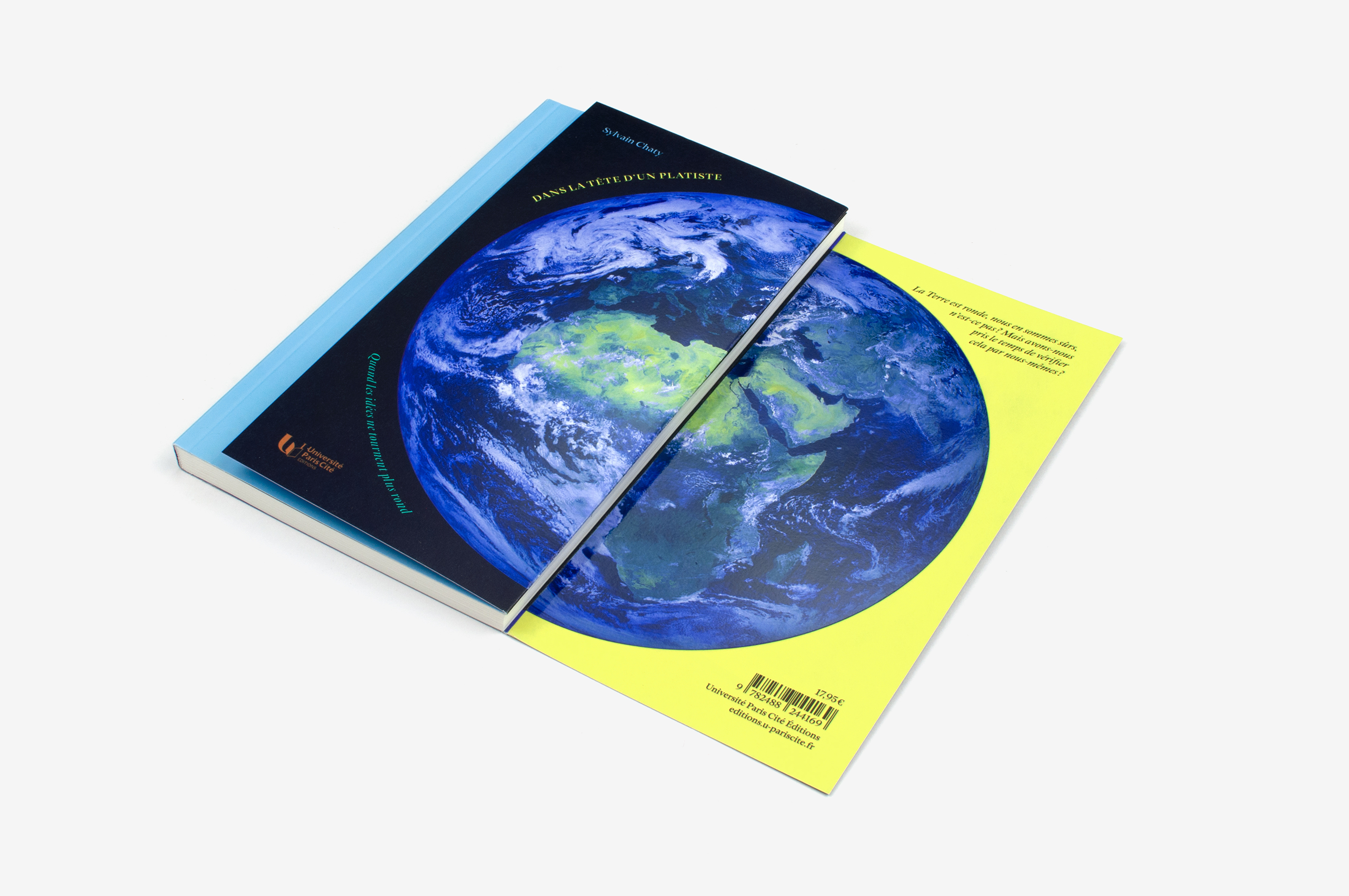
Ce livre, dans lequel l’astrophysicien Sylvain Chaty s’approprie de façon décalée les arguments d’un platiste pour les mettre en perspective, puis les réfuter par un argumentaire scientifique rigoureux, est un objet éditorial non identifié. J’ai été sollicitée par les éditrices pour le mettre en forme, afin que le design soit aussi insolite que son contenu. La couverture, avec son système de rabats repliés vers l’extérieur, rend palpables les paradoxes du récit. Ainsi, le corps du livre — son bloc intérieur — est pris en étau entre la première et la quatrième de couverture qui, dépliées, donnent à voir le globe terrestre photographié par la NASA. Au sein de chaque rabat est déployé le schéma étrange de la Terre telle qu’elle est représentée par les platistes. En deuxième et troisième de couverture, une représentation synthétique de la dualité jour/nuit offre une perspective encore différente, qui fait écho à mes livres Au soleil et Dans la lune. L’intérieur de l’ouvrage, imprimé en trichromie, permet de distinguer aisément les différentes parties: introduction et annexes en marron, démonstration platiste en vert et argumentaire scientifique en bleu nuit. Les schémas trichromes qui émaillent l’ouvrage illustrent les points de vue divergents tout en conservant une cohérence visuelle globale. La reliure Otabind permet d’ouvrir le livre bien à plat, comme il se doit!
This book, in which astrophysicist Sylvain Chaty takes a tongue-in-cheek approach to the arguments of a flat-Earther in order to put them into perspective, before refuting them with rigorous scientific reasoning, is an unidentified editorial object. The publishers asked me to design it with the brief that the layout should be as unconventional as its content. The cover, with its system of outward-folding flaps, illustrates the paradoxes of the narrative. This means that the body of the book — the inner block — is sandwiched between front and back covers that unfold to reveal a photograph of the Earth taken by NASA. The underside of each flap shows the curious diagram of the Earth as imagined by flat-Earthers. On the inside front and back covers, a schematic representation of the day/night duality offers yet another perspective, echoing my books Au soleil and Dans la lune. The interior of the book, printed in three colours, makes it easy to distinguish the different sections: the introduction and appendices in brown, the flat-Earth demonstration in green and the scientific argument in midnight blue. The three-colour diagrams distributed through the book illustrate various different viewpoints while maintaining an overall visual coherence. The Otabind binding allows the book to lie completely flat when opened, just as it should!